
Do you experience an unwanted sharp sensation while having cold or hot water? If yes, then you have a dental disease where you experience excruciating pain when taking water, called tooth sensitivity. While initially, such a case may seem unimportant to deal with, you might be facing a huge challenge if you don’t handle it accordingly.
People often disregard such a dental problem, thinking that it would go away on its own. However, the truth of the matter is that tooth sensitivity may indicate some dental concerns, including wear and tear of enamel and gum recession.
One benefit of learning the signs of tooth sensitivity is that you will be able to control it easily. This paper will explore all the aspects of tooth sensitivity.
To put it simply, your teeth have different layers. Enamel creates the outermost layer, which safeguards all internal tooth structures. Dentin is second layer, which has a softer texture than enamel. The dentin layer becomes visible after the gums recede and the enamel layer wears away. This is when all problems occur.
The thing about the dentin is that it has microscopic channels that lead directly to the nerve located inside. So, once food or anything else touches your tooth surface, the feeling travels down to the nerve and causes sharp pain.
Unlike ordinary toothaches, which usually last for a very long time, sensitivity is very fast. It usually lasts for only several seconds before disappearing completely. Even though it's short, it can still cause you some inconvenience.
Teeth may become sensitive for several reasons, including tooth decay, receding gums, worn fillings, gum disease, cracked or chipped teeth, and habits like clenching or grinding. These factors contribute to why teeth become sensitive.
Sensitivity in teeth is normally not constant; rather, it comes as a result of being triggered. Some of the typical triggers of sensitive teeth include:
There are some differences among people. For some individuals, sensitivity occurs only when drinking a cold drink, whereas for other people, it could happen anytime.
The intensity of pain may differ as well. For some, it would not pose any problem, but for others, it would hurt them so much that they would be unable to eat anything.
In case you encounter the same feeling again and again, it is a signal from your teeth.
Sensitivity in teeth does not occur suddenly but slowly. Below are some of the major causes of sensitive teeth.
The enamel may be very strong; however, it is susceptible to erosion due to a variety of factors such as excessive brushing, use of rough bristles in the brush, and consumption of highly acidic foods. After wearing, there will be exposure of the second layer, causing sensitivity to begin.
Your gums cover and protect the roots of your teeth. When they start to pull back, the roots get exposed.The problem is, roots don’t have enamel like the top part of your teeth. That’s why they are much more sensitive. This can happen because of gum disease, brushing too hard, or just getting older.
Cavities make small cavities in your teeth. This allows heat, cold, and sugar access to your tooth's nerves. If you feel sensitivity in just one of your teeth, then chances are that you have a cavity in that particular tooth.
A small crack in your tooth may lead to your teeth being sensitive. You may not be able to see the crack, but you will surely feel the pain. This may lead to infection depending on how bad the condition is.
There are some individuals who grind their teeth subconsciously, primarily while sleeping. Ultimately, due to grinding of teeth, the enamel is worn off, leading to sensitivity of teeth.
Teeth sensitivity may occur due to the procedure of teeth whitening, filling, and cleaning of teeth. However, it usually disappears within a few days, although sometimes it might persist for a longer period. In such instances, you should seek help from a Queens dentist.
Foods such as soda, taking in fruits with a high level of acidity, or eating acidic foods will erode your enamel over time. You may also develop this condition if you take a glass of lemon juice daily.
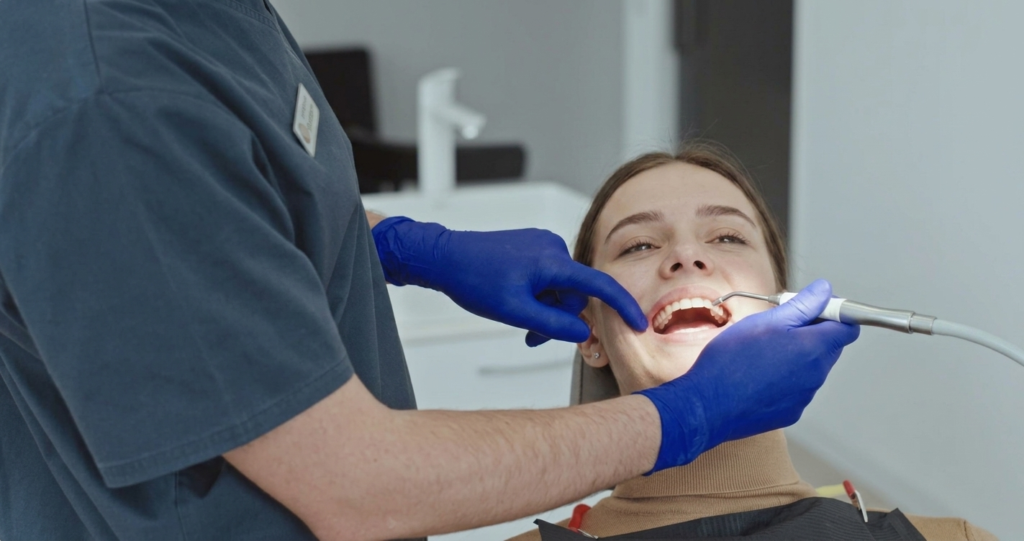
Unlike when you go to a dentist who guesses everything, they examine you thoroughly and determine the cause. They can conduct a physical examination of your teeth and gums, examine your oral hygiene and eating habits, and examine any cavities or tooth decay.
They might even conduct an X-ray to examine the condition of your mouth. This enables them to treat the problem rather than the symptoms.
It really depends on what causes sensitivity. Luckily, there are various treatments for it.
For mild cases, using desensitizing toothpaste can help a lot. It works by blocking the pain signals going to the nerve. Use of a soft brush and gentle brushing may help, too.
If your condition is severe, the dentist may recommend:
If your sensitivity doesn’t improve, visiting a Dentist in Queens is the best step to take.
It is very simple to avoid the development of sensitive teeth – it involves proper oral hygiene.
While brushing, use a soft-bristled toothbrush, and be gentle while doing so; however, you should avoid overdoing anything.
An additional recommendation on how to avoid tooth sensitivity is to consume less acidic food.
It would help if you had your dental appointments done periodically; otherwise, this problem would only progress.
In case you are suffering from sensitive teeth that occur for a few days or only affect just one tooth, you need to see a dentist. Furthermore, any change in the tissues around the gums requires proper attention from your dentist. The experienced Dentist in Queens will find out the reason for sensitivity and solve this issue.
Although having sensitive teeth seems to be a small issue, it might be a sign of something else entirely. You should resolve this matter from the get-go rather than waiting for something worse to happen.
Here’s the bright side: This condition is very easy to control. With dental care, you can ensure that you will experience no discomfort whatsoever while enjoying your favorite foods. What your teeth are saying to you.
YOUR FIRST STEP TOWARDS A BEAUTIFUL SMILE IS JUST A PHONE CALL AWAY!